
Block Jam: Cookie Master
Playful BytesCasual
4.845.00 Reviews
- Version
- 2.1.3
- Installs
- 100.00K
- Age Rating
- Everyone
Screenshots
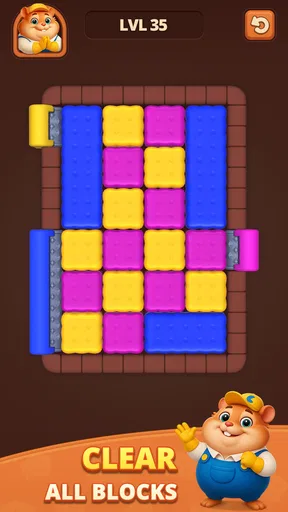
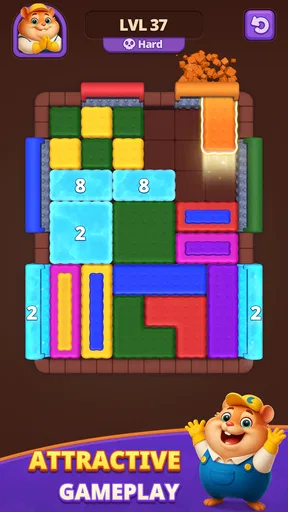
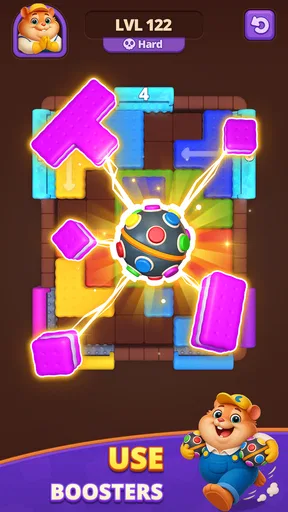
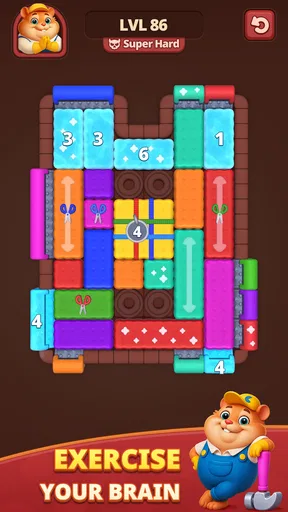
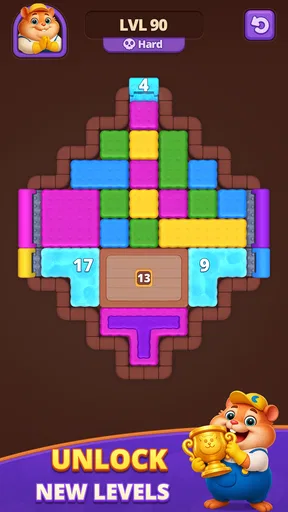
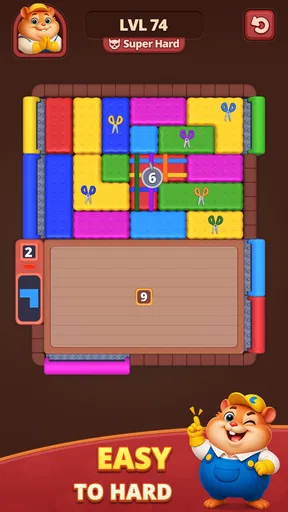
Our Review of Block Jam: Cookie Master
 Analysis by Appyee
Block Jam: Cookie Master is the kind of casual puzzle game I can open without preparing myself for a long session. Its basic idea is easy to understand: move blocks, bring matching colors together, and work toward completed puzzles. After spending time with it, I found that its real appeal is not a complicated rule set, but the small decisions that make a seemingly simple board gradually more demanding. It is a good fit for short breaks, quiet evenings, and anyone who enjoys visual problem-solving without the pressure of a competitive game.
Playful Bytes presents it as a free game for everyone, and that description matches the approachable first impression. The game belongs firmly to the casual category, so it does not ask me to learn a large world, memorize a story, or manage a complicated collection of systems. The current release is version 2.1.3, and the game requires Android 8.0 or later. That makes the practical question less about whether the concept is difficult to understand and more about whether the board presentation and touch interaction suit the way you prefer to play.
How the puzzle presentation affects readability and navigation
The clearest strength is the direct relationship between the board and the objective. I can look at the colored blocks, identify what needs to be matched, and begin experimenting almost immediately. That simplicity matters for players who do not want a tutorial-heavy experience. It also makes the game easier to share with someone who has not played this type of puzzle before: explaining the goal takes very little time.
Navigation feels most comfortable when I treat each puzzle as a visual workspace rather than rushing through it. I first scan the whole arrangement, notice which colors appear constrained, and only then start moving pieces. This habit is more useful than tapping randomly because one early move can change the space available for later matches. The game rewards a pause-and-plan rhythm, which is especially helpful for players who prefer processing information before acting.
For readability, color is naturally central. That is also the first point where individual needs can differ. A player with strong color recognition will probably understand the board quickly, while someone who has difficulty distinguishing similar shades may need more time to verify a match. I would not choose this game assuming that color alone is equally clear for every player. Before committing to longer sessions, it is sensible to test whether the blocks remain easy to tell apart on your own screen and at your usual brightness.
The compact nature of the rules is an advantage for cognitive accessibility. There are fewer instructions to retain than in a strategy game with several resources, characters, or menus. I can return after a break and remember what I am doing without rebuilding a mental model. That makes it suitable for casual players who want a puzzle rather than a demanding daily routine.
At the same time, simple rules do not mean every board is simple. The challenge comes from predicting consequences. A move that creates an obvious color match may also block another route or leave an awkward space. My most reliable approach is to identify the tightest area first, then consider whether a move opens or closes the board. This is a useful technique for anyone who finds open-ended puzzles confusing: reduce the board to one immediate constraint instead of trying to solve everything at once.
The game’s audience is broad. Its age rating is Everyone, and the absence of a complicated narrative or mature theme makes it easy to imagine playing around family members. I would still separate age suitability from ease of use. Younger players may understand the matching goal quickly but need patience with the planning involved, while older players may appreciate the calm pace but prefer a larger display if small visual details are uncomfortable.
Why the visual simplicity works, and where it may not
One of the more useful qualities here is that the board gives me a concrete task instead of surrounding it with distractions. That can make the game feel less mentally noisy than many casual alternatives that combine puzzles with constant rewards, collections, or several layers of menus. If your priority is a clean color-and-position challenge, Block Jam: Cookie Master stays focused on that central activity.
However, the same focus can become a limitation for players who need strong non-color cues. Matching by color is intuitive, but intuition depends on seeing those differences clearly. I recommend playing in the lighting you normally use rather than judging the experience only in ideal conditions. A board that is comfortable in daylight may feel less distinct late at night, and a small phone screen can make close shades harder to compare.
Navigation is also easier when I avoid treating every available move as equally urgent. I use a short visual checklist: find the most restricted block, check the destination space, and consider what will remain afterward. This is not a separate feature or hidden mode; it is simply a workflow that makes the game more manageable. It also reduces the frustration of undoing a chain of impulsive moves, particularly for players who prefer deliberate interaction.
Motor, sensory, and situational considerations
Because the game is built around moving blocks, touch accuracy matters. Players who can make small, controlled gestures should find the interaction approachable, but anyone with tremors, limited dexterity, or difficulty maintaining a steady touch may experience more friction. I would not describe it as a game that removes motor demands; the puzzle may be mentally calm, yet the board still expects the player to select and move pieces accurately.
A practical way to make play easier is to hold the phone securely and use a stable posture rather than playing while walking or carrying something. I get better results when the device is supported in one hand or resting on a surface, leaving the other hand free for deliberate taps and drags. That sounds basic, but it changes the experience for anyone whose control becomes less precise when the phone is moving.
Short sessions help here. Since the game is casual, I do not need to treat it as a long uninterrupted activity. I can solve a board, stop, and return later without feeling that I have lost the point of the game. This makes it more suitable for players who fatigue quickly or who need frequent breaks. It also works well for people who share a device or have only a few minutes available between other tasks.
Sensory comfort is more individual. A color-focused board may be pleasant for someone who likes clear visual organization, but it may be tiring for a player sensitive to busy patterns or repeated visual comparison. I found that the game is easiest to approach when I keep the screen at a comfortable brightness and avoid playing in glare. These are ordinary adjustments rather than special accessibility tools, but they can make a noticeable difference in whether the board feels inviting or exhausting.
Sound is not the reason I would recommend this game. The essential information is on the board, so I can focus on the visual arrangement and play in a quiet setting without needing a spoken explanation. That makes it practical in places where audio is inconvenient, such as a waiting room or a shared room. More importantly, players who do not want to rely on sound can judge their progress from the puzzle itself.
For someone with color-vision differences, the main trade-off is clear: the central mechanic may be less immediately readable than a puzzle that uses shapes, symbols, numbers, or text as its primary distinction. I would test the game personally before recommending it as an inclusive choice for that player. If the colors are easy to separate on the intended device, the simple rules may still be appealing. If they are not, the core challenge becomes visual identification rather than puzzle planning, which is a meaningful barrier.
Players who are sensitive to time pressure may appreciate the way this type of puzzle encourages thinking before acting. I do not approach it like an arcade game. My best sessions happen when I allow myself to inspect the board, make one move, and reassess. That slower method also helps players who process visual information at their own pace. The game is less suitable for someone looking for constant action, rapid reactions, or a strong sense of physical excitement.
Where it fits into an ordinary day
A realistic use case is a short break during a commute or while waiting for an appointment. I can open the game, examine one board, and decide whether I have enough attention for it. The format is more flexible than a story-driven game that expects me to remember characters and objectives, and less demanding than a competitive puzzle that makes every second feel important. If I am mentally tired, I can still attempt a board, but I should not expect the game to solve the puzzle for me; the planning requirement remains present.
It also works as a quiet shared activity. I can show the board to a friend or family member and discuss the next move without needing them to understand a complex control scheme. That creates a small collaborative moment, although it is still fundamentally a solo puzzle rather than a social game. If you want built-in multiplayer, conversation systems, or a persistent group experience, this is not the right category of game for that need.
For children, the clear objective can make the game approachable, but I would still encourage adults to let them experiment rather than immediately correcting every move. The useful skill is learning to see how one block affects the rest of the board. For older players or anyone returning to mobile games, the limited rule set can be less intimidating than a large strategy title. The best fit is someone who enjoys visual order and does not mind solving through trial, observation, and patience.
Compared with match-three games, this feels more like spatial planning than rapid swapping. A match-three alternative may offer more spectacle, chain reactions, and reward loops, while this game’s appeal is the arrangement of blocks and the consequences of movement. Compared with word puzzles, it avoids spelling and vocabulary demands but places more weight on visual discrimination and touch control. Compared with minimalist logic games, it is approachable because the color-matching goal is immediately visible, though players seeking deep rule variety may eventually find the central idea narrower.
Remaining barriers and who should think twice
The biggest limitation is that accessibility depends heavily on the player’s ability to read and manipulate a color-based board. A game can be easy to understand in theory and still be difficult in practice if the pieces are too similar, the display is small, or touch accuracy is inconsistent. I would be cautious about recommending it to anyone who already knows that color matching on a phone is tiring or unreliable.
There is also a difference between low complexity and low cognitive demand. The instructions are straightforward, but later decisions can require concentration. Players with attention difficulties may enjoy the focused task, yet they may also become frustrated when a casual-looking board punishes a rushed move. My advice is to use a “one area at a time” approach: solve the most restricted section first, then reassess instead of trying to hold every possible sequence in mind.
Another trade-off is the lack of a broader role-playing or progression identity in the experience I reviewed. That is a benefit if you want to get straight to a puzzle, but a weakness if you need a strong reason to return beyond the next board. People who enjoy decorating, collecting, narrative chapters, or character development will probably find more satisfaction in a different casual game. This one makes its case through the puzzle itself.
The free price lowers the barrier to trying it, and the game has reached over one hundred thousand installs. Its average rating is 4.8 from roughly eight hundred ratings, with several dozen written reviews. Those figures suggest that the basic experience has connected with many players, but they should not replace personal testing when visual or motor needs are important. A highly rated game can still be a poor match for a particular screen, hand posture, or color-perception profile.
I also think the Android requirement deserves a practical check before downloading. The minimum is Android 8.0, so anyone using an older device will need to confirm compatibility first. Players on a supported phone should still consider screen size and responsiveness, because the same board can feel comfortable on one device and cramped on another. This is particularly relevant for people who depend on precise touch placement.
One useful habit is to avoid playing when the phone is nearly impossible to see clearly. Glare, dim surroundings, and a moving vehicle can turn a thoughtful puzzle into a visual strain test. If you need a game for unstable conditions, a text-heavy or audio-supported alternative may be more dependable. Block Jam: Cookie Master is best when you can give the board a stable glance and your hands enough control to make intentional moves.
Players who want accessibility settings specifically designed around large text, alternative symbols, adjustable controls, or extensive input customization should investigate those needs before making this their main puzzle game. I would not assume that a simple interface automatically provides those options. The strength here is the uncomplicated concept, not a promise of comprehensive adaptation for every ability.
My inclusive verdict after playing
I recommend Block Jam: Cookie Master to people who want a free, calm, color-based logic game that can be understood quickly and played in short bursts. Playful Bytes keeps the central idea easy to grasp, and the lack of complicated systems makes it welcoming for casual players, families, and anyone returning to mobile puzzles after a long break. The Everyone age rating supports that broad audience, while the Android 8.0 requirement gives older-device users a clear compatibility point to check.
Its inclusive qualities come mainly from simplicity and flexibility of pace. I can pause mentally between moves, play without depending on a story, and use the game in quiet or shared environments. Those traits make it friendlier to different schedules and attention patterns than a game built around rapid reactions or long sessions. The board also creates a useful middle ground: easy enough to enter, but thoughtful enough to reward planning.
Still, I would not present it as universally accessible. Color recognition, screen readability, and accurate touch input are central to the experience. Players with color-vision differences, limited dexterity, visual fatigue, or a need for extensive customization may be better served by a puzzle that offers stronger non-color cues or more control options. Likewise, people seeking story, multiplayer interaction, or high-energy action should choose another style of game.
My final recommendation is therefore specific rather than absolute: try it if you enjoy arranging visual pieces and want a low-pressure puzzle with little setup. Start on a comfortable screen, play in steady lighting, and give yourself time to inspect the board before moving anything. If the colors are clear and the touch controls feel natural, the best part of Block Jam: Cookie Master is its inviting balance between immediate understanding and careful thought. If those basic visual or motor requirements already create difficulty, its straightforward design may not be enough to overcome the barriers.
Verdict
Strengths of Block Jam: Cookie Master
- Simple tap-and-sort gameplay that is easy to learn.
- Short levels work well for quick breaks.
- Colorful cookie-themed visuals feel cheerful and inviting.
- Gradually increasing difficulty keeps the puzzles engaging.
- Offline play is convenient when no connection is available.
Limitations of Block Jam: Cookie Master
- Some levels can feel repetitive after extended play.
- Later puzzles may rely heavily on trial and error.
- Frequent ads can interrupt the flow between levels.
- Limited variety in the core gameplay may reduce long-term appeal.
- Hints or extra moves may be restricted behind in-app purchases.
Other Releases by Playful Bytes
View All
Take Off Bolts: Screw Puzzle
Puzzle4.1

Match Family: Triple Match 3D
Casual4.7

Mahjong Mingle
Board4.8

Find Hidden Cats- Spot it!
Casual4.8
Similar Picks in This Category
View All
My Talking Angela
Outfit7 Limited4.2

My Talking Tom
Outfit7 Limited4.3

Pou
Zakeh4.2

My Talking Tom 2: Pet Game
Outfit7 Limited4.3

Candy Crush Saga
King4.6

Bridge Race
Supersonic Studios LTD4.1
Frequently Asked Questions
What is Block Jam: Cookie Master and how is it played?
Block Jam: Cookie Master is a casual puzzle game built around arranging and matching colorful blocks, with a sweet cookie-themed presentation. The main objective is usually to clear pieces from the board by placing matching shapes or colors in the correct positions. Its simple controls make it easy to start, while later stages introduce tighter layouts, limited moves, obstacles, and more demanding combinations.
Is Block Jam: Cookie Master free to download and play?
The game is generally available as a free download, allowing players to begin without paying an upfront purchase price. However, free-to-play games commonly include optional in-app purchases for coins, boosters, extra moves, or other helpful items. Advertisements may also appear between levels or after failed attempts. Before downloading, check the store listing for the current pricing, advertising policy, and supported payment options.
Does Block Jam: Cookie Master require an internet connection?
Some parts of Block Jam: Cookie Master may work without a constant internet connection, which is useful when playing during travel or in areas with weak coverage. Nevertheless, online access can be required for advertisements, cloud progress, updates, special events, leaderboards, or purchases. Offline behavior may also change after updates, so players should not assume that every feature will remain available without an internet connection.
Are there ads or in-app purchases in Block Jam: Cookie Master?
Players should expect that Block Jam: Cookie Master may contain advertising and optional in-app purchases, as is common with free mobile puzzle games. Ads can sometimes be used to receive extra rewards or continue a level, while purchases may provide currency, boosters, or additional attempts. If you are concerned about accidental spending, review your device’s purchase settings and consider enabling parental controls before playing.
Is Block Jam: Cookie Master suitable for children and casual players?
The straightforward matching and block-placement mechanics make Block Jam: Cookie Master suitable for casual players who enjoy short, relaxing puzzle sessions. Its colorful cookie theme is also likely to appeal to younger audiences. Parents should still review the age rating, advertising, data-collection details, and purchase options on the official app store, because difficulty, promotional content, and online features can vary between versions.
Play our best games!


